
Archaeologists in Switzerland have unearthed a glove that was probably worn by a medieval soldier or knight. Dating to the 14th century, the medieval armor is very well preserved.
The medieval armor was found in the ruins of a medieval weaving cellar on the southeastern grounds of Kyburg Castle. Kyburg, near the Swiss-German border, rises on the river Töss and is home to the country’s oldest castle museum.
The weaving cellar is known to have burned down in the 14th century, but researchers believe a blacksmith was forging metal in the area some time before the fire. According to the statement, more than 50 metal objects were found at the excavation site, including tweezers, hammers, pliers, keys and knives.
“Such a well-preserved and complete glove from the 14th century has never been seen before in Switzerland,” they say. “Who did this glove belong to? Was it newly made in the Kyburg forge or worn in battle?”
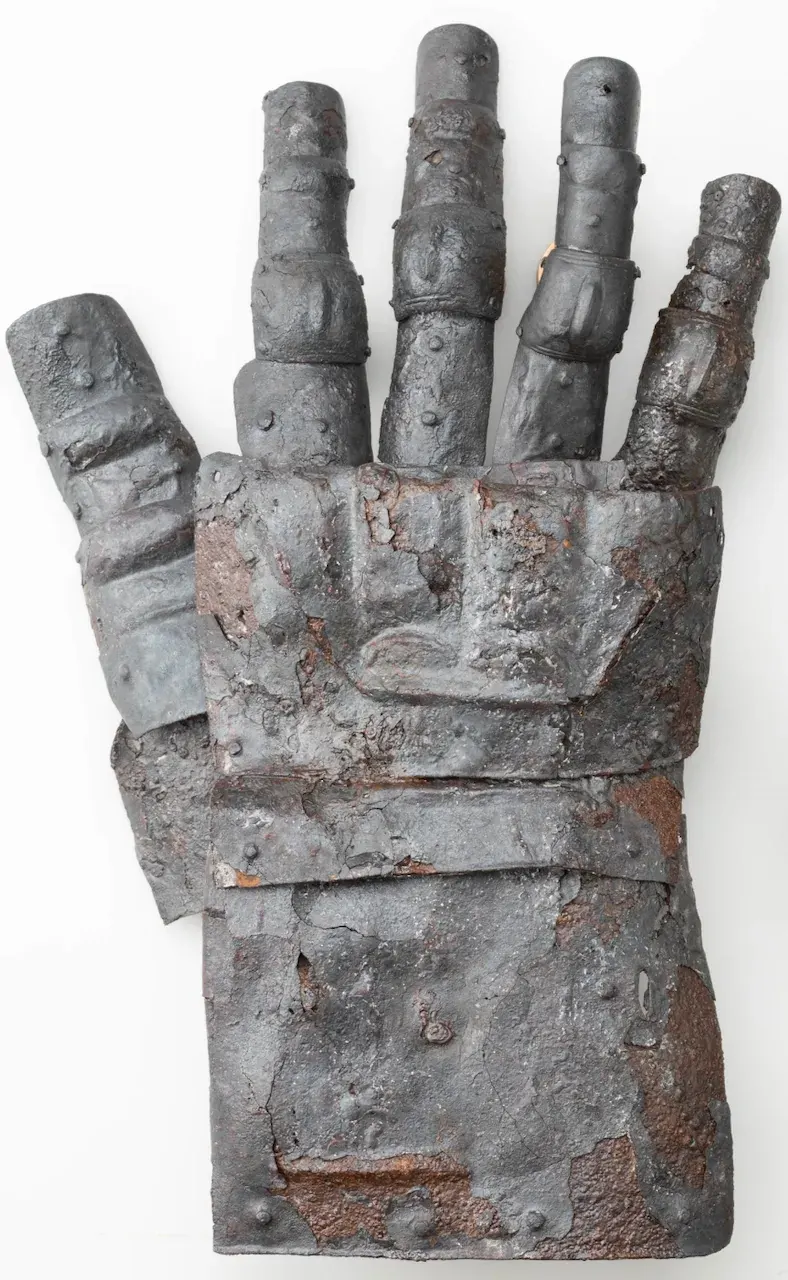
While European soldiers and knights began wearing gloves in the 11th century, authorities say it is “extremely rare” to find a glove from before the 15th century, Emily Mae Czachor reports.
The newly discovered glove is a “four-fingered glove” worn on the right hand. Made of iron, the armor’s metal plates are stacked on top of each other like scales. This design provided both protection and range of motion for the wearer’s fingers. The glove could have been worn while wielding a sword.
There are still unanswered questions about the typological development of the glove and who it once belonged to. Only five gloves of similar age have been found in Switzerland, and of these discoveries, the Kyburg glove is the best preserved. Authorities say its “details of design and decoration” also set it apart from other finds. Several fragments of its left-hand twin were even unearthed nearby.
The original glove will be on display in Kyburg for several weeks this fall. At the end of March, a replica of the glove will become a permanent exhibit at Kyburg Castle, along with the researchers’ reconstruction of how the glove would have looked in the 14th century.
Hi, in these weeks I made a deep research about Switzerland in 1300 and I think they could be a remnant of the Burgdorf conflict which occurred between 1383 and 1384, between the noble Von Neu-Kyburg family and the army of Bern, they could have belonged either to Rudolf II Von Neu-Kyburg who died during the same conflict or his relative Berchtold I.
I hope it can be useful as information.