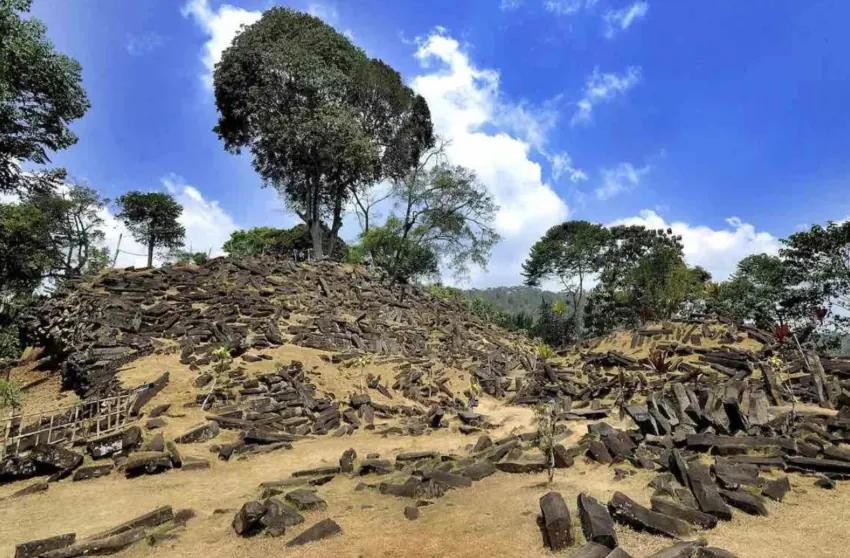
Gunung Padang has long been recognized as a megalithic structure; it sits at the top of an extinct volcano in West Java, Indonesia, and is considered a sacred site by locals. In 1998 it was declared a cultural heritage site.
For many years there has been disagreement about the nature of the hill. Some have argued that the hill was built naturally, with humans adding some ornamentation, while others have argued that there is evidence to suggest that the hill is entirely or mostly human-made.
The research team conducted a long-term scientific study of the structure. Between 2011 and 2015, they studied the structure using seismic tomography, electrical resistivity tomography and ground-penetrating radar. They also excavated the hill and collected core samples that allowed them to use radiocarbon dating techniques.
In analyzing the data, clear evidence was found that Gunung Padang was built mostly by human hands. They also found that it was built in stages, thousands of years apart.
According to the recently published research, Gunung Padang was built thousands of years before the accepted date for the birth of civilization. Built about 25,000 to 14,000 years ago, during the last Ice Age, the pyramid is even older than the famous pyramids of Egypt.
Even more intriguing, tomographic tests carried out at the excavation site have revealed that the ancient structure contains many large secret chambers that have remained buried for thousands of years. These chambers may provide clues about the site’s mysterious builders and what their purpose may have been.
Gunung Padang: Mount of Enlightenment
Translated as “mountain of enlightenment”, the Gunung Padang structure dates back to an estimated 25,000 BC. Radiocarbon dating of soils in the area also confirmed this surprisingly early date.
Archaeologists have known about the site for more than a century. But new research has confirmed the earliest construction at the site. The builders probably used primitive hand tools to meticulously shape the structure.
“The builders of Gunung Padang must have possessed extraordinary masonry skills that are incompatible with traditional hunter-gatherer cultures,” the researchers say. “This study sheds light on advanced masonry skills dating back to the last glacial period. It also challenges the traditional belief that human civilization and the development of advanced construction techniques only emerged during the warm period.”
Little is currently known about the people who built Gunung Padang. It is certain that this site was more than just a series of terraces built one on top of the other. Researchers say that Gunung Padang is not just a simple prehistoric stone terrace, but a complex structure with important rooms and cavities. Some of these rooms are up to 15 meters long and 10 meters high.
The team hopes to explore these hidden chambers next and find more clues about this great feat of Neolithic engineering.
“Gunung Padang is notable for being potentially the oldest pyramid in the world. Further research will reveal hidden secrets and shed more light on the ancient civilizations that flourished in this enigmatic region.”